Rain Or Shine
Omar
Feature Interview
It's a familiar scene. There's a desk and it's tiny. Shabby chic, tucked into a corner of NPR Music's Washington DC headquarters – the kind of open-plan office space with a water-cooler and temperature-controlled air conditioning. Behind the desk, a band crammed shoulder to shoulder, having swapped the sardine tin of the tourbus for the knick-knack-drawer layout of the makeshift TV studio. Legends and superstars – Stevie Wonder, Chaka Khan, Lauryn Hill and Babyface, to name a few – have graced the nylon carpet tiles to lay down broadcasts that go viral, live and direct to your handheld.
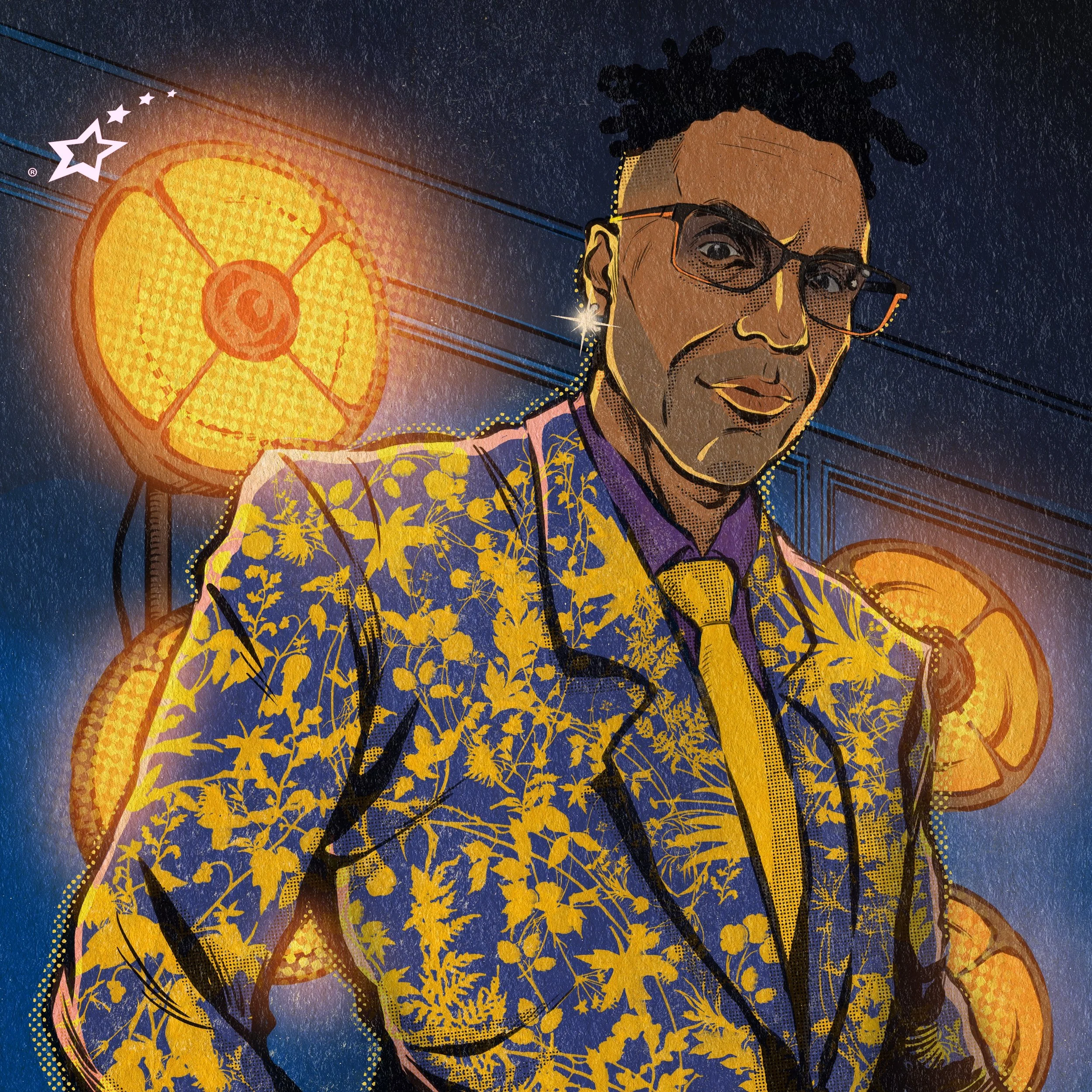
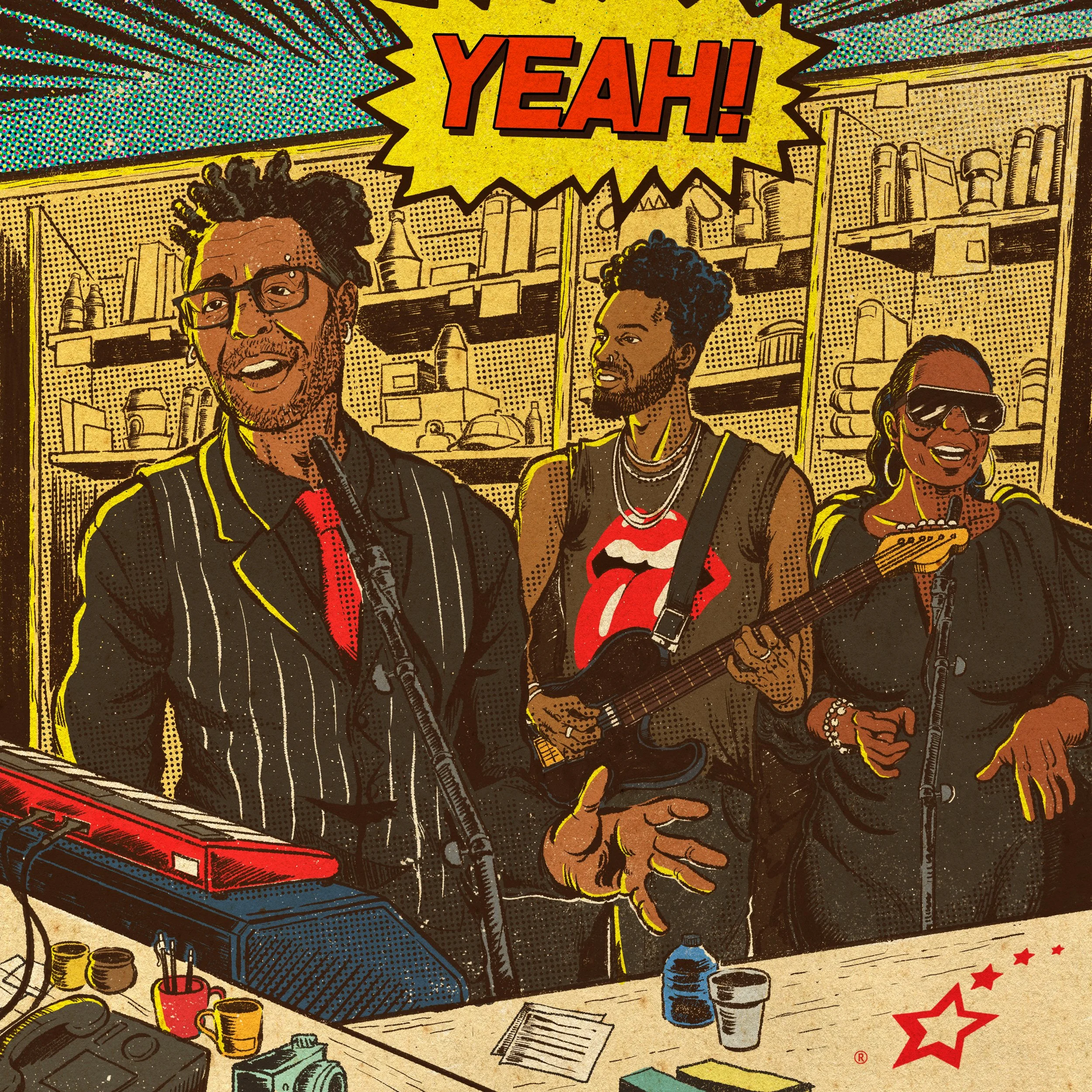
But this time the headliner is one of our own – UK soul maverick Omar Lye-Fook MBE. Running swiftly through some of his bona fide classics – There's Nothing Like This, Little Boy, This Is Not A Love Song – and a newer, surefire monster, Can We Go Out?, from his critically acclaimed ninth album, Brighter The Days. Looking sharp as ever, like he's stepped out of a tailor's on Bond Street. Black shirt, pin-striped waistcoat. Fire-engine red tie. Tinted glasses and his distinctive short locks, lined like his stubble with silver. He sings of a reacquaintance with an old flame, reflecting on his part in their breakup, then wondering – "if you had ever done the same..." – "YEAH!" he sings with girth as the bridge kicks in, the backing singers joining in unison, as the camera cuts to the band. Black I's Mike Griot on bass, nodding in appreciation, locked in the gallop of the groove. Teddy Crockett on guitar bobbing his head, with Vivian Sessoms clicking her fingers below her French tips. The concert would go on to collect over a quarter of a million views.

Photo by Jo Allen
The added exposure cemented Omar's place on the BBC's Later... with Jools Holland. Paul Weller, the king of the mod revivalists and one of a slew of big-name features on the album – alongside India Arie, Ledisi, Eric Roberson, Raheem DeVaughn, Giggs, Jeru The Damaja and Honey Larochelle – suggested Omar play a copy of their duet to Jools, who dug it. "Let's see how the Tiny Desk goes," came the line from the show's producer.
Tiny Desk caused a stir. Live chops proven. Job done.
Omar earned his return to primetime.
Nothing's a given, not even when you are one of the true greats of UK soul. He's never gone proper mainstream – even though most people could hum along to There's Nothing Like This, his smash hit from 1990, and Stevie Wonder once said, tongue in cheek but with reverence, "When I grow up, I wanna be like Omar."
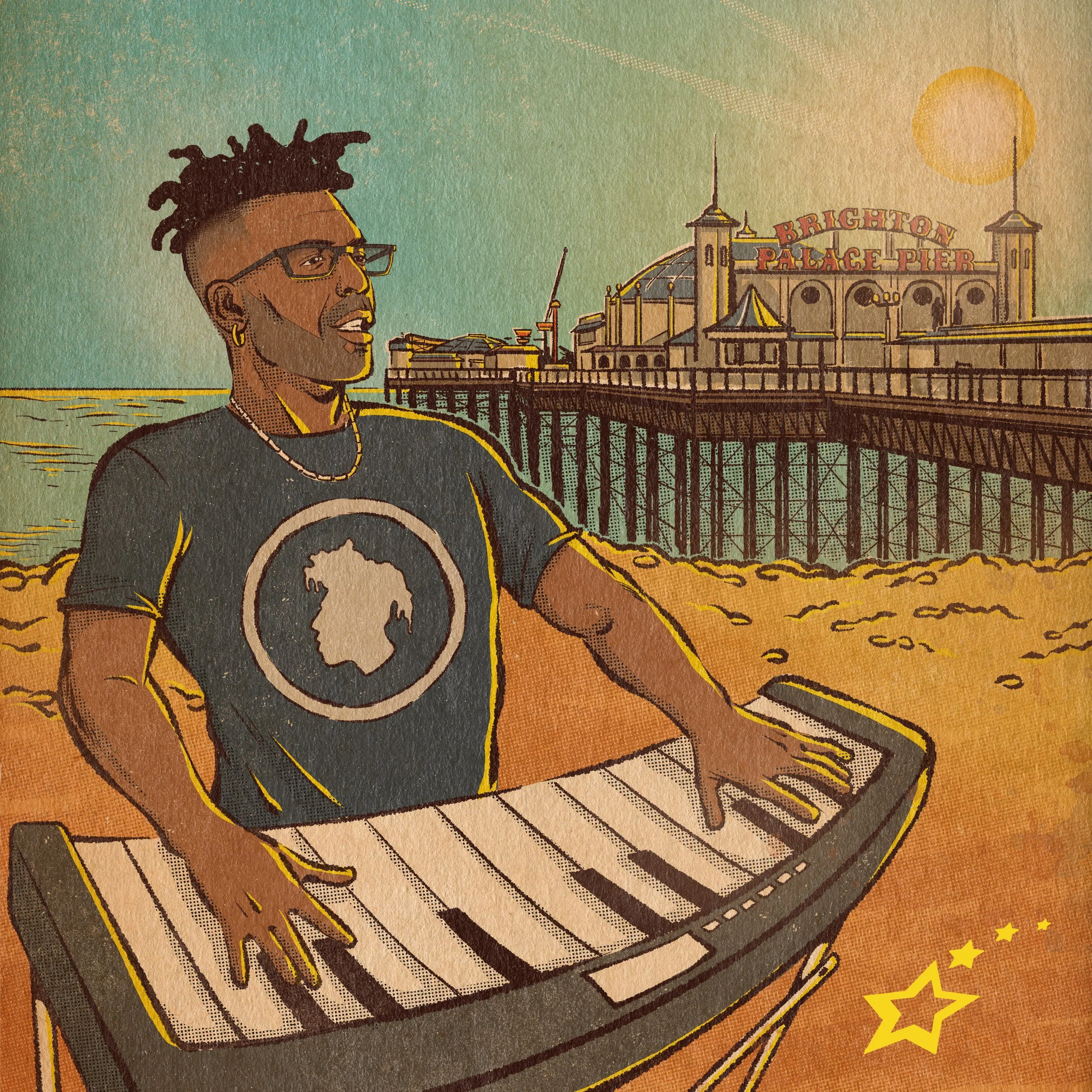
"I've never sold those kind of numbers," says Omar, sat in a black hoodie and dark jeans, looking relaxed on the other side of a mahogany table in an Instagrammable café in his hometown of Brighton. Sitting by the cast-iron commercial dock of Portslade Harbour, the spot is a refuge from the spit-and-drizzle mist of an overcast May morning – a short stroll from Omar's crib.
“I’ve always been underground. I do feel that way.”
"From the artists themselves, I can't step out of the door without the love," he continues. "But that doesn't translate to the movers and shakers, the executives, y'know? The last time Radio 1 touched me would have been There's Nothing Like This. I've always been underground. I do feel that way. Sales are not the reason I make music. I make music to express myself."
Released via Greg Boraman's Impressive Collective label, a partner of the legendary BBE Records, Brighter The Days arrived and earned Omar Jazz FM's Soul Act of the Year gong. Sixteen tracks. Numerous features, all beautifully assimilated into the Omar sound: bass foundations, bourbon-soaked a cappella that ranges from ancestral hum to honeyed falsetto, organic musicianship, synth-funk and sweet flourishes. A statement to rival For Pleasure, Music and Sing (If You Want It) in Omar's rich catalogue.
"I kind of feel this is my magnum opus," he says when asked to compare it to his other works. "But does that mean this will be my last one? I don’t know if that’s what it means. But you cannot ask me to choose between my babies!" he laughs.
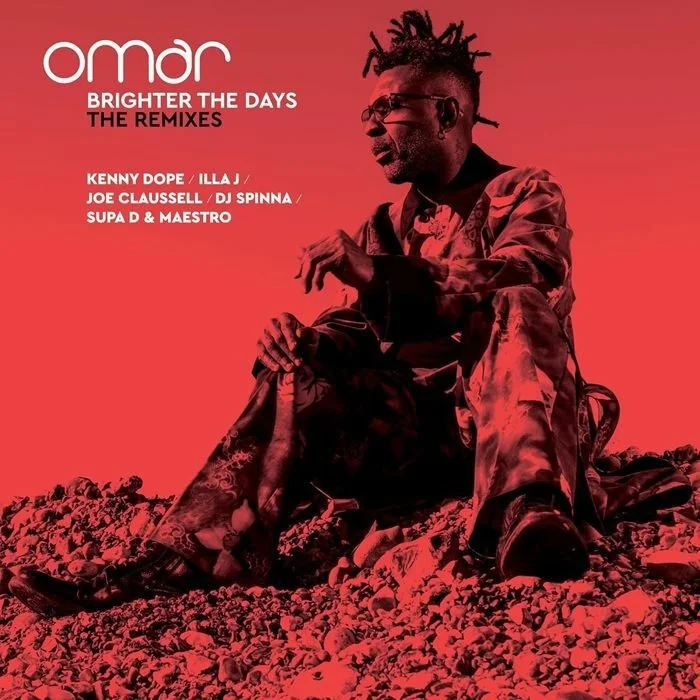
If it were to be his last official studio album – and one suspects not, with Brighter The Days – The Remixes, featuring Kenny Dope, DJ Spinna and Illa J, waiting in the wings for release later this month – it would be a defining statement.
The album began in the wee small hours during the Covid shutdown. It was 1am and Omar was surfing YouTube looking for Henry Mancini's lush and orchestral Lujon when another tune cued up.
"I found this John Barry piece called 007 And Counting and the whole idea sprung forth," he recalls. "I began It's Gonna Be Alright, which samples the John Barry song. After singing a melody, I thought, I need some lyrics, somebody else to write them, and that's when I called my friend Vannessa Simon."
Omar's process, much like Marvin Gaye's, is to hum along and hone the words. He and Vannessa go way back, to his days signed to his dad Byron Lye-Fook's label, Kongo Dance. She duetted on You & Me on Omar's debut album There's Nothing Like This, and he produced her debut album Family Madness. “She’s more nuanced than I would be,” says Omar, “and she’s able to fit it to what I’m singing.”
“It’s like a puzzle. Every bit has to fit.”
Vannessa also came up with the title of the song, Brighter The Days, which – after Omar did a quick hashtag search ("you have to check that first, it's like if you put #Omar, that doesn't work because so much comes up") – became the title of the album. On social media, a fan pointed out the unintentional echo of Brighter Day, by Noel McKoy – the late soul singer who, alongside Omar, Don-E and Junior Giscombe, made up The British Collective supergroup.
The positivity is evident in the song titles, written under the shadow of a prostate cancer diagnosis.
"It is a mortality-type event," he says, with the matter-of-factness of someone who has come to terms with the ordeal. "I took it in my stride but, y'know, I've got kids. I had to tell them."
Omar's doctors caught it early after a routine check-up. He has since been given the all-clear. "I've been very lucky. I get a check-up every six months. I'm not waiting to get symptoms."
Black men over 50 are four times more likely to develop prostate cancer, so Omar went on Eddie Nestor's BBC London show to talk about it.
"Noel McKoy's passing was another thing as well. He knew he had certain illnesses but he kind of ignored them, chose not to go to the hospital. But also my brother passed from cancer in 2014. He was very stubborn – didn't trust the medical profession. All the stuff they were telling him that he could have been getting treatment for, he refused."
Distrust of treatment is a symptom of the times, I suggest, with people wary of vaccines and medical institutions.
“I’m closer to the end than I am the beginning.”
"I don't think they're trying to kill me, knowwotimean?!" Omar laughs. "What good does it do them to try and kill me?"
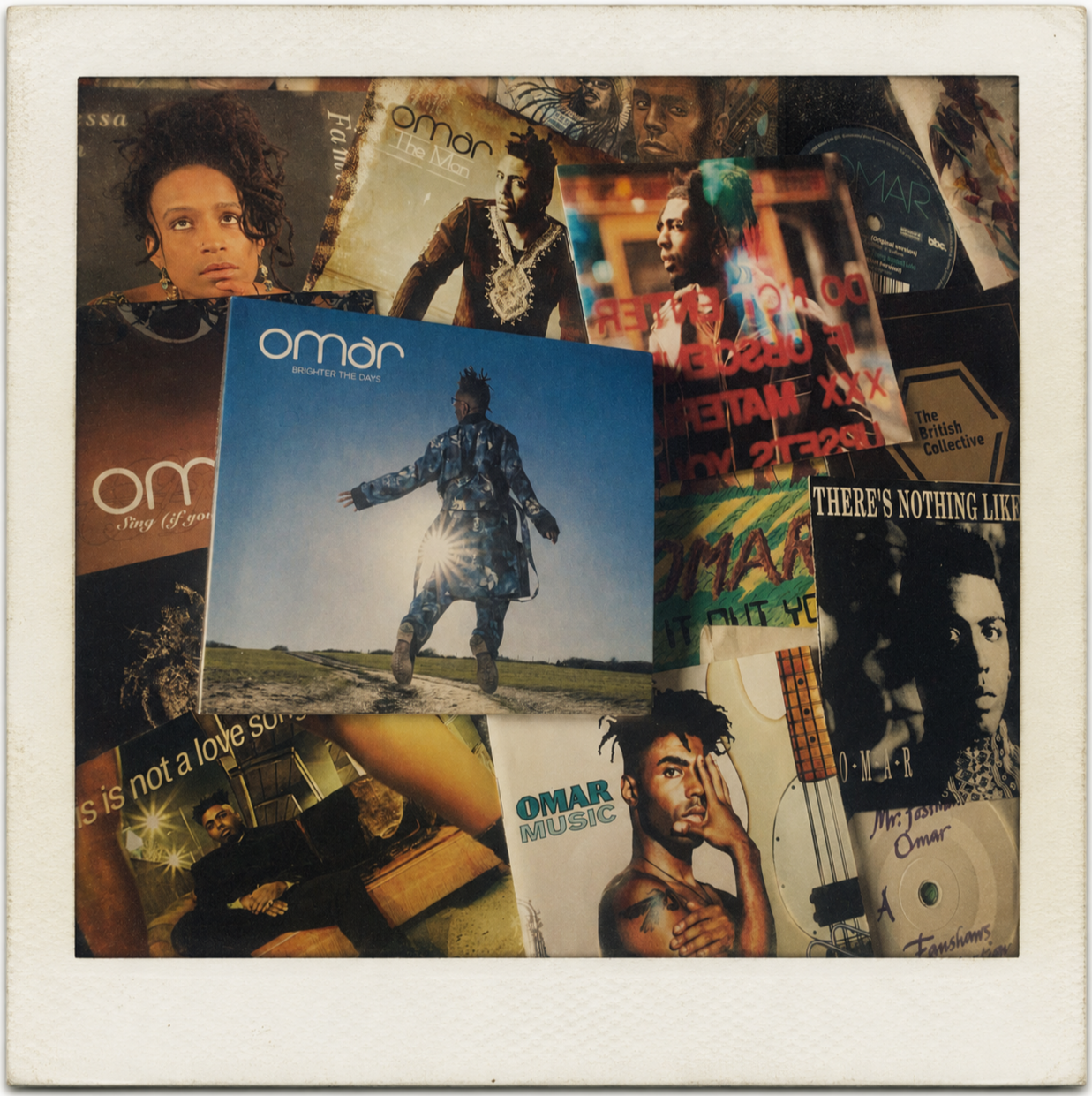
The titles tell you everything – Holding On To Life, There's Much Love In The World, Lovey Dovey. The cover shows Omar leaping on the South Downs, bathed in sunshine.
"I'm closer to the end than I am the beginning," he explains. "I mean, I don't feel that way, but life is too short. There's so much that divides people, but there is much more that connects us. I'm here for the good times and I want to spread that with my music."

Photo by Jo Allen
Lovey Dovey goes back to 2006. "Me and my brother started that twenty years ago. The Man came and went, Love In Beats came and went, but then it was right for this album." He shares a Dropbox with his brother Scratch Professer – a Grammy-winning producer in his own right for his work with Stephen Marley – and they pulled out Lovey Dovey, released on collectible 7-inch vinyl as a solo cut just before Brighter The Days dropped.
Feeling You, his celebrated duet with Stevie Wonder, started life in 1999. The Stevie vocal arrived in the years before the song's eventual release in 2006 on Sing (If You Want It).
"When you make an album, it's like a puzzle," Omar explains. "Every bit has to fit. I like to make music, and the music is like wine. You can keep it in the cellar until it's the right time to drink it."
I ask him if that's champagne wine.
He laughs, recognising the reference to the lyrics of There's Nothing Like This. "I really have no idea what the fuck champagne wine is!"
“I really have no idea what the f*ck champagne wine is!”
Lovey Dovey was originally meant for Eric Benét. Omar played him the demo and he was like, "Man, that is fire!" but the two lost touch. Eric Roberson stepped in, bringing his A-game with a raspy high tenor delivery. He and Omar go way back — at a gig the two had done together, Eric had given props on stage – "Man, I took so much of your stuff!" – to roars from the crowd. "What Eric sent me, those lyrics, it was all mixed. I didn't have to put any effects on it. He's next level," Omar says. Raheem DeVaughn took another verse, rolling back the years to his early Urban Ave 31 and Jazzy Jeff days. "That scratch effect, that was Raheem's voice doing his best Jazzy Jeff DJ impression."
All these soul guys look up to Omar. "The artists do mention my name. I get that all the time. My bank account doesn't see it!" he laughs.
When Erykah Badu, D'Angelo, Angie Stone and Eric Benét were carving out neo-soul in the late nineties, Omar had been doing the work for the better part of a decade already, signed to Talkin' Loud alongside Galliano, Incognito and the Young Disciples, classed as acid jazz because that was the CD section HMV used to put him in.
"We were just basically trying to make that retro soul and funk," he says. "The music that we used to like to listen to, that we wasn't hearing at that point. It was acid house. It was hip hop. Samplers and sequencers – it wasn't real instruments and bands and stuff."
The DNA was American. The Ohio Players song Heaven Must Be Like This inspired There's Nothing Like This. "Why isn't nobody playing anything like this?" Omar remembers thinking. "This is bass, drums, keys, guitar and a full orchestra."
By the late eighties, even his hero was elsewhere – Stevie had gone full Yamaha synth on Characters. "When I did Feeling You with him as well, we'd started on a different track which is kind of like that. And I was like, 'Oh, I love Stevie, but that's not what I really want.'"
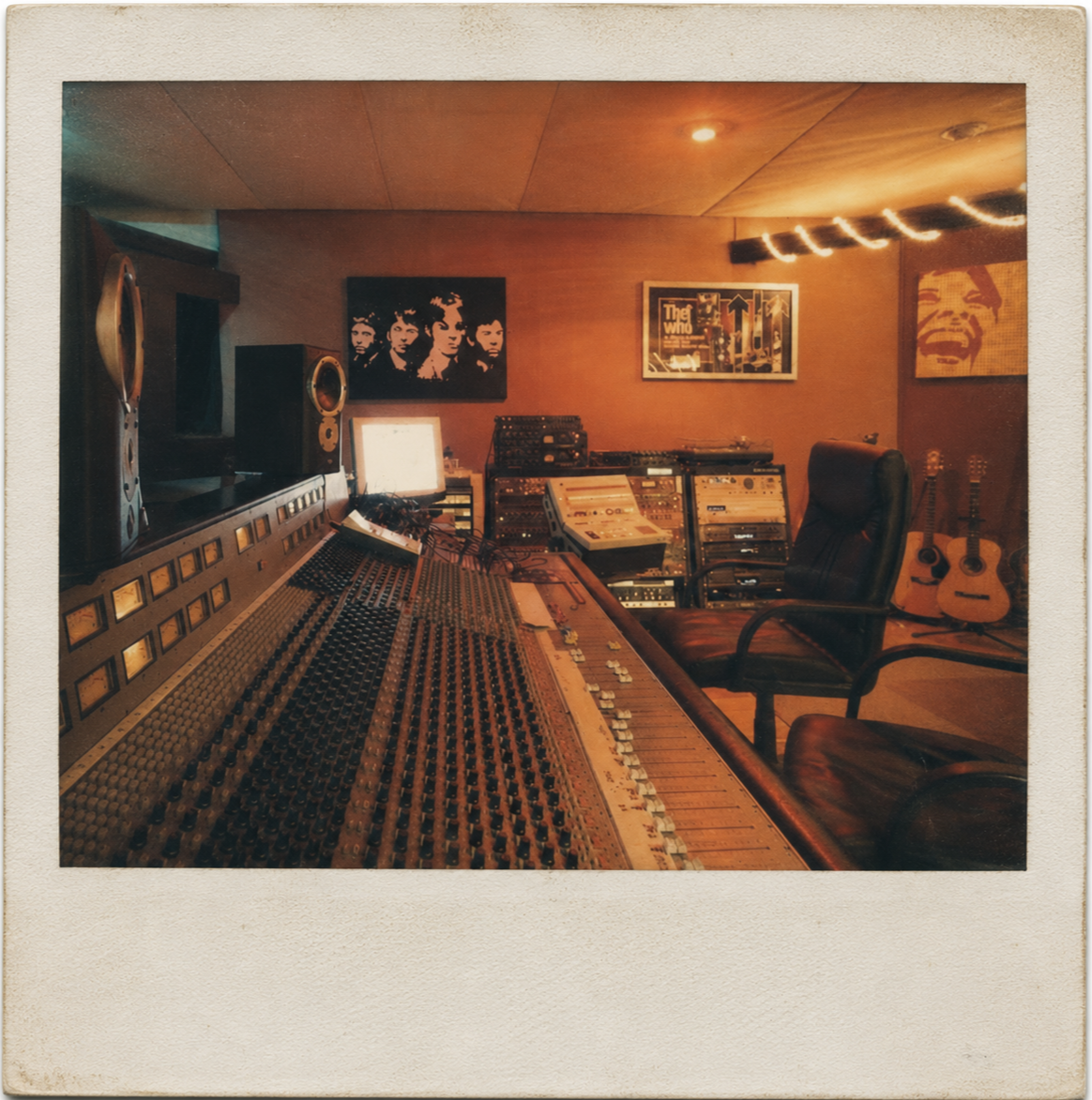
So Omar took the session on the road. His friend Jerry Meehan – the bass player who ran the Wendy House studio – had a band jamming there. Omar laid down the more organic, funky soul of Feeling You, taking Stevie back to a seventies-era vibe. "It was just that love of American music."
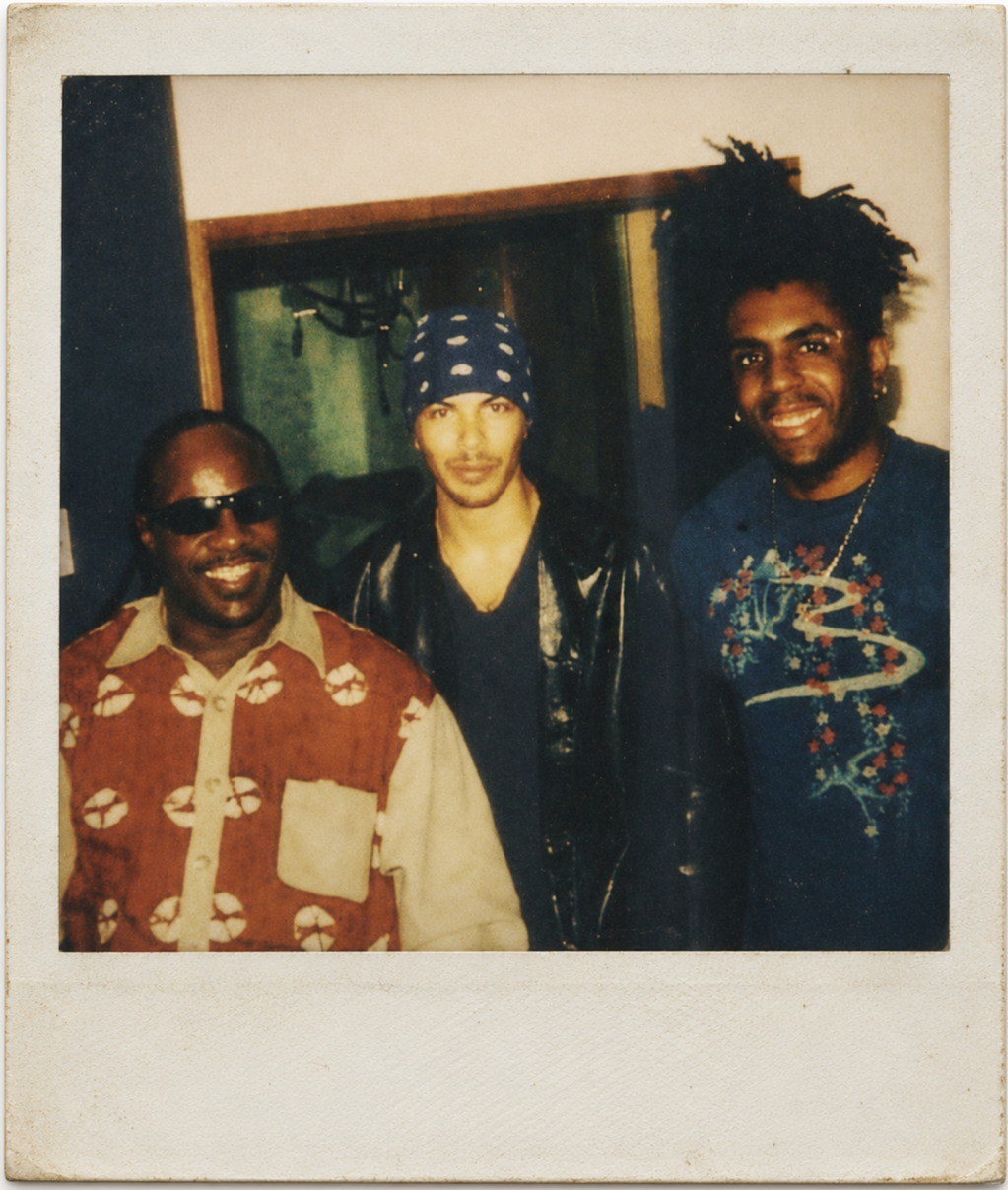
Stevie, Stuart Zender & Omar
The single that preceded the album release, Can We Go Out? was the only new song he played at Tiny Desk – its own kind of statement of confidence on such a short set. His friend, renowned dub producer Mike Pelanconi, aka Prince Fatty, sent him the beat, having received it from reggae drummer Horseman and Brazilian percussionist Charlis.
"I was having a lovely smoke," Omar says, unabashedly. "It was just that beat and percussion, and I just let this thing run and run and run."
He captured the moment on Instagram Live during Covid, at his Backayard studio in Thornton Heath.
The Omar flourishes are all there – xylophone, flute signatures going back to This Is Not A Love Song. The bridge kicks in and your shoulders start bobbing along, like you're white-water rafting at 95 BPM. The horns arrived later at Paul Weller's Black Barn studio in Ripley, near Woking. Weller also had a timpani and tubular bells lying about, which made it onto the track.
“The artists do mention my name. My bank account doesn’t see it!”
The Weller story is one of the album's set-pieces. Omar's first professional gig had been playing percussion on the Style Council's Japan tour in 1989. More than thirty-five years later, they still hadn't recorded together.
"My mate Max Beesley was like" – Omar puts on a suave voice – "'Yeah, yeah, you've gotta come see the Paul Weller show.'"
After the show, Weller invited him down.
"I cannot speak about that guy highly enough," Omar says. "That's how we started On My Own. I was determined that I got something from him like The Jam. Mod. He gave it that vibe with the chords."
The finished track sits on the album with the legendary Ronnie Foster on Hammond organ and Daru Jones sitting in on drums.
When DJ and jazz impresario Greg Boraman, who runs Omar's label, heard it, he said: "Right, I want to go buy a parka and a Vespa!" For Omar, it's reminiscent of a scene from cult mod staple, Quadrophenia. "Do you know that scene with Sting in the ballroom and then Phil Daniels climbs up onto the balcony and starts dancing? I can see him dancing to On My Own like that," he says.
Three tracks came out of the Weller sessions in all – two still sit in the vault. "Paul told me, 'Ah, why didn't you put that on there? That's a bloody hit!'“ Omar teases, “So watch this space!”
As he finishes that line, an almighty racket erupts behind him. The café has its own roastery, and one of the roasters is banging the hell out of a bean loader.
"Is that alright?" Omar says, leaning forward towards the phone's microphone.
"It'll pick your voice up," I say.
"And that's all you'll need." Omar laughs.
“Ah, why didn’t you put that on there? That’s a bloody hit!” - Paul Weller
Another standout is the Tonto style-fonk of Research with Honey Larochelle, originally recorded in 2010. She came to him before Covid, asking if they could finally put it out, but he wasn't happy with the original footage. So it sat on the shelf until he flew to New York and they reshot it. Drone footage. His editor Elliot Simpson – who cut the video for Make Love, Fuck War from The Man – put it together. Daniel Fridell, the Swedish multi-instrumentalist Omar wrote The Man with, plays a leopard-skin Fender Rhodes in the video. “Can you believe that song was nearly fifteen years old,” says Omar. “Greg heard it. ‘Wait, what’s this? That’s a banger.’ So I kept it for my album.”
The sessions at Mitzpah Studio in Bath yielded the spine of the record. Ben Jones on bass and guitar, Ben Edwards on trumpet, James Gardner-Bateman on alto sax and Dan Bingham on keys. "One of my provisos was, I need an Al Green tune." Cue the Hi Records-style Hodges Brothers stomp on the title track. "They're all next-level musicians, so it was quite easy. 'Fuck it,' we said, 'let's do two days.' We did three songs in just two days." They all made the cut.
There's Much Love In The World came out of those sessions. Gorgeous strings, the kind of arrangement that belongs in Wigmore Hall. "Doesn't matter if it's rain or shine," he sings, giving the album its emotional compass. On I've Been Waiting, the song that samples Dynasty's Adventures In The Land Of Music, everyone assumes the trumpet was part of the sample. That was Ben Edwards in Bath.
"Oh my God, Leon Sylvers," Omar says of Dynasty’s producer, suddenly animated. "I'm discovering so much about him. I've still got a lot of work to do!"
Two of America's finest soul heroines sit deep in the second half of the record. Ledisi contributes to Holding On To Life. The mercurial India Arie appears on Love Is Like, co-written by India and former Jamiroquai bassist Stuart Zender – the man who laid down those monstrous basslines on Too Young To Die and Space Cowboy. The song features an epic coda.
“Ah man that was all Stuart,” says Omar. “I could only take it so far, racking my brain. He’s great at that kind of thing. He also gave it to some dude in Korea (B.A. Wheeler) to mix it, which really saved my bacon. I thought it was ready, all last minute, but India said ‘Yeah, but it’s not mixed’ But they went and cleaned it up nicely.”
“I need an Al Green tune.”
He's worked on more material with India that hasn't seen the light of day yet. "There's a whole bunch of stuff I've done that is out of this fucking world," he says. "But they've got to be willing to release it."
The outside production work is largely unheralded. Highlights include the fantastic Today on Laurnea's debut in the nineties. Ain't That Love by Sherry Davis. More recently, Girls by Morgan Munroe, Joss Stone and Sanity – a groove cut from the same cloth as Can We Go Out? And I Should’ve Known Better by Mica Paris, a fan favourite of hers that ended up consigned to a B-side.
"They tucked it away. But that's down to them. Once the productions leave the studio, it's up to them to do what they want. I just try and do my best."
He's been at this for over forty years, has been through it all but shows no bitterness. Omar was sixteen when he put out his debut single, Mr Postman (he winced a little at the mention). Recently, at a show in Hastings, somebody who knew him in his school days brought a programme that mentioned a song he'd made with the title "Extravaganza by Omar Hammer!" The surname he used to go by. He'd totally forgotten about it.
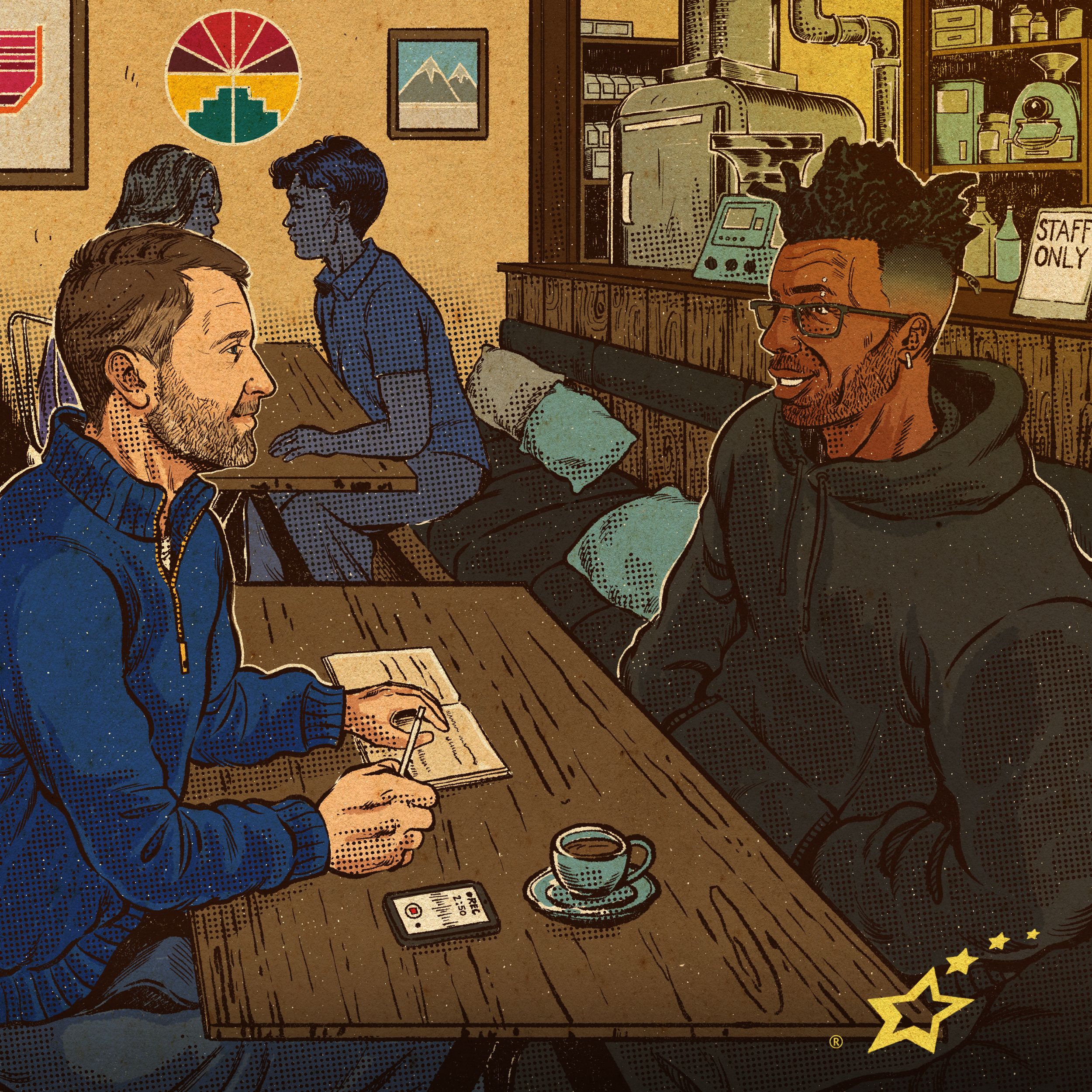
By now the rain had stopped and the sun was shining through a break in the clouds. We part ways outside the roastery company's entrance, crossing the car park shingle. Omar, the hardest working man in soul-Britannia, has a rehearsal to get to, for the next batch of shows.
Driving along the coast towards home, I put This Thing Called Life on, the opening cut from Brighter The Days.
It reminds me of first getting into Omar as a sixteen-year-old in the early nineties, taking a train up to London on my own (for the first time) to meet my brother and see an Acid Jazz gig at Brixton Academy, Jamiroquai. I can still vividly remember listening to Omar's Music album on my Walkman, the glare of the Vauxhall sunset illuminating the carriage. Who Chooses The Seasons, the wistful duet Omar recorded with Young Disciples label mate Carleen Anderson, whirred away, played for the umpteenth time. Felt like a proper soul-boy. I had begun sporting brown corduroy, blue Gazelles and a red beanie my mum had got me from Burtons. Marvin-lite.
At the venue, as Last Request played on my earphones, the queue around the block in Brixton was pungent with the smell of weed - I wasn't sure if I was high on that or the aroma of my own Lynx Africa. This Thing Called Life, a throwback to that era, took me straight back there. Omar's music has long been the soundtrack to mine.
That's the magic.
“Brighter The Days”
is available to Stream Here.
Words by Dan Dodds | Comic Art by Longnose
Originally Published on this site June 2nd, 2026