
Lovingly Restored

Conner Reeves
Feature Interview
On what looks like an old sixties black-and-white telly, the curtain raises after a commercial-break brass fanfare to a large round of applause. “Well, well, well, we’ve got a great treat for you today… we’ve got the Connertations!” announces the MC with an American accent, the name of the makeshift group flashing across the screen before British singer-songwriter Conner Reeves appears on your handheld, in triplicate – made possible through the magic of a phone app. Each Conner is dressed differently, even down to a different flat cap – Reeves’ signature style.
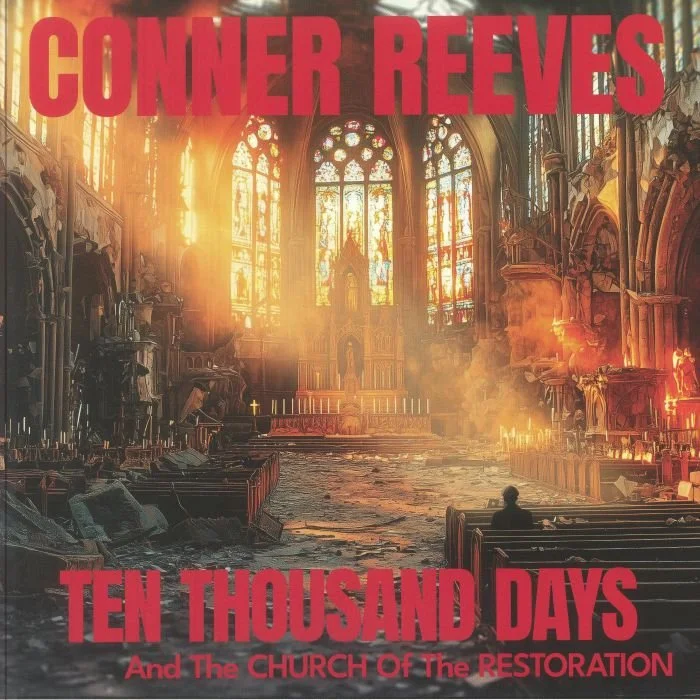
“Tell these arms they’ll never, ever get to hold you… again,” they sing a cappella, a sweet and lilting chorus from Conner’s soul ballad “Tell These Arms” – one of the standouts from Reeves’ 2025 album Ten Thousand Days & The Church of Restoration, its title referencing the 10,000 days – or 27 years – since his gold-selling debut album Earthbound, which featured “My Father’s Son”. Like the great soul groups of yesteryear – the Chi-Lites, the Bluenotes or the O’Jays – the Connertations “trio” perform choreographed hand gestures, from crossing his arms over his chest to spinning his wrists and raising his elbows. Typical – you wait 27 years for a new album from white-skinned soul hero Conner Reeves, and then you get three of him at once.

That abundance feels apt. Reeves has swiftly returned with the release of “Slow Lightning” – a newly recorded duet with Joss Stone, the first addition to emerge from More Than Ten Thousand Days and the Church of Restoration, a deluxe edition of his album due April 17th. Two voices, no extra flat cap required.
“Ah, those bloody Connertations,” says Reeves from his la casa on the Spanish isle of Ibiza, laughing. “They take me hours – three to four hours for one video. I’ve got to do a costume change, clothes, hats, everything. My air conditioner’s too loud so I have to turn it off, and I’m absolutely sweating. I do every detail to the nth degree, but it is such a pain in the arse.”
“I’d never really fancied Ibiza. I associated it with rubbish music and drugs.”
Known for its Balearic beat and hedonism, Ibiza is where Reeves crafted the album, in a creative sanctuary on the north coast. “I’d never really fancied Ibiza,” says Conner, on Zoom, illuminated by red globe lamps – cap present and correct. “I associated it with rubbish music and drugs. But someone offered me a flat for six months during lockdown. I thought, why not? It’s nothing like people think. I’ve been here three and a half years now. I’ve got my own standalone place – no one above, below or next door – so I can record into the early hours if I want.”
The first single, “Bones” – one side of a double header with “Sweetest Invasion” – started life in a flat in Balham, in the front room of an Edwardian house owned by a friend. The urgent, expansive lead track is a spiritual call to action before we’re all expired – Reeves making his background vocals sound like the Fisk Jubilee Singers. “I was sofa surfing at the time,” he says. “There were people walking around upstairs. Every time I heard a footstep, I’d check it wasn’t on the vocal mic. It had this vibe I couldn’t recreate. I tried re-recording it here in Ibiza, but it didn’t have the magic.”
Reeves was homeless at the time, his life in the intervening years since Earthbound being anything but easy. “It’s been a real ride,” he says. “At one point I was on the verge of bankruptcy, but I couldn’t afford the £900 to file for it. How does that make sense? You can’t pay to say you’re broke! And because I was director of my label, I couldn’t have done it anyway. Somehow, though, I kept the wolf from the door.”
He pauses. “But it adds authenticity, y’know? If everything had been hunky-dory for the last twenty years, I don’t think the album would be as potent – self-praise is no praise, but I do think you can hear the truth.”

Locations across the south of Greater London hold special musical memories for Reeves. He wrote “Ordinary People” whilst walking past Boots on Eltham High Street, singing the hook – pre-smartphone – into a Dictaphone. Growing up in Peckham served as inspiration for the B-side to “Bones”, the ethereal, Thom Bell / Philly-soul-influenced “The Sweetest Invasion”.
“My parents had a massive music collection,” says Reeves, who remembers their copy of the bestselling Avco vinyl The Best of the Stylistics, featuring classics like “Betcha By Golly Wow”, “Rockin’ Roll Baby” and “You Make Me Feel Brand New”, which depicted all five members on the back dressed in turquoise suits with cravats and bow ties. “They used to play that album every Sunday – that was music day. It was just oozing with soul – that sitar on the intros. Me and two of my brothers were there, but I think it affected me more. The feeling… it just seeps into you.”
“The song came to me almost fully formed,” he continues. “It arrived with melodies and words. Came to me like a cannonball leaving a castle wall. It was one of the easiest songs to write on the album.”
“They used to play The Best Of The Stylistics every Sunday. It was just oozing with soul.”
But that’s not always the case, he says. One of the album’s most affecting moments is “Chrysalis”, written during lockdown. “That song was an absolute pain,” says Reeves, laughing. “I was living in Kensington during Covid and felt trapped. It’s about transformation – being stuck and finding a way out – where it becomes the making of you. But getting the words right was so difficult. I’d work all day, go to the gym to clear my head, then listen back and know instantly if it was wrong. One morning I just lost it – threw my coffee mug against the wall, shouting, ‘This fucking song!’ It still wasn’t right. But when it finally clicked, it felt like a release.” The concept itself came from an unlikely place: a documentary about lifers. “I was watching these people who’d been in prison for decades,” he says, “and I just thought – how do you deal with being stuck like that? Some come out better for it, some come out worse. And I figured the only way out is up.” On the CD, Reeves had the artwork designed to match: a prison cell, light coming through the bars, and on the wall – a butterfly silhouette. “It’s a major wink,” he says. “That image just nails everything the song is about.”
When Earthbound was released at the end of 1997, it achieved respectable success – reaching No. 25 on the UK album charts – and contained three Top 20 hit singles. It arrived during the burgeoning neo-soul era, with Reeves in good company alongside talents such as Lynden David Hall and Lewis Taylor. He went on to inspire a new generation of singer-songwriters, including James Morrison – who worked with him on his 2025 release “Little Wings”, the Stevie-influenced highlight from Morrison’s Fight Another Day album.
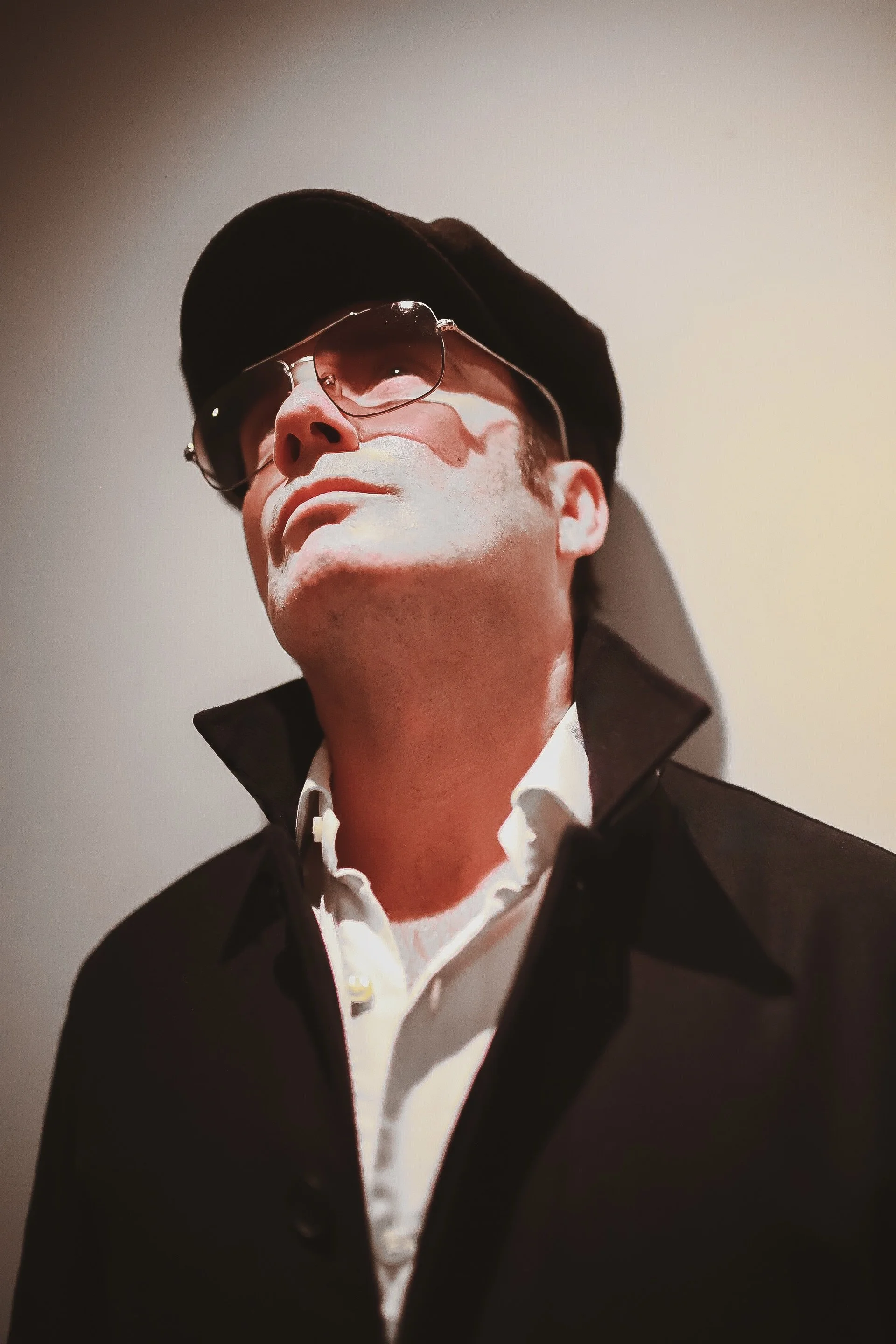
“Getting to write with one of my childhood heroes was incredible,” Morrison told me in an interview for Blues & Soul Magazine. “I remember seeing Conner sing “My Father’s Son” and just being floored. To see a white guy in a flat cap singing a very Black-soul vocal made me realise I could sing like that too.”
For Reeves, those early days were as exhilarating as they were frustrating. “The label didn’t really know what to do with me after Earthbound,” he says. “I wrote loads of songs for the second album, went to the States, but nothing stuck. I had this one track ready to go – “Live to Love” – full orchestra, beautiful arrangement. Then a new MD came in and said, ‘You can do better.’ It just seemed like whatever I brought in, they weren’t feeling it.”
He laughs ruefully. “Meanwhile my publishers were shopping the songs around. Artful Dodger heard one – “Please Don’t Turn Me On” – and wanted me to sing it. That song was right under their noses, but they didn’t see it.”
“The label didn’t really know what to do with me after Earthbound.”
The record company didn’t move fast enough, and they gave it to another singer, Lifford. “My manager said, ‘You could block it – you’ve got fifty per cent of the song – but you’d be stupid to.’ So I let it go, and of course it was a hit. Lifford’s a really lovely guy, but I just thought, what am I supposed to do?”
Soon after, in 2003, Reeves left both management and label. “My managers were like, ‘Look, I don’t think there’s much future with this record company,’ so I was like, ‘OK, great – I’m out, and whilst we’re on the subject, I’d like to make an entire break…’ so I left my management too,” he says. “I’d just become a dad. I needed space. So I started writing every day again in this little room at the top of the house, when I wasn’t doing baby duties. That’s how I got my confidence back.”
By the time his EP Welcome to the Future and the song “Something Beautiful” arrived in 2005, the music world had shifted. Reeves had new management – who he’s still with today – and worked with production team Future Cut, who had achieved success with Lily Allen. “Lovely guys, real old-school soul heads,” he says. The project saw Reeves edging toward independence. “I didn’t have the full confidence to do everything myself then,” he admits. “But it was the first step.”
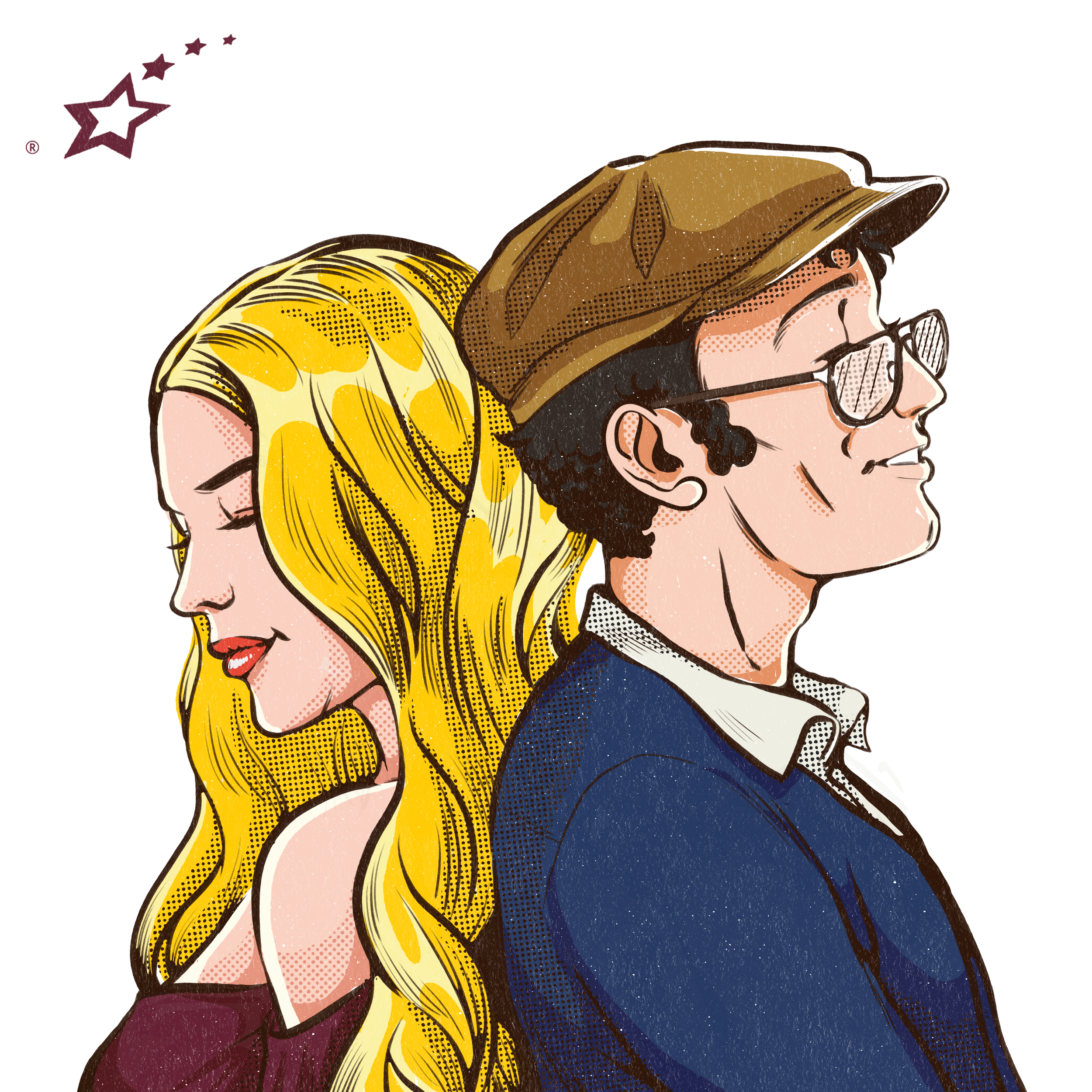
Other projects followed – writing and producing for Joss Stone – he contributed several songs to her brilliant 2nd album Mind, Body & Soul (that coincidentally included one of Thom Bell's last arrangements on "Spoiled" – the master of sweet soul who inspired “The Sweetest Invasion”) and continued the partnership on Colour Me Free in 2009 – and sessions that never saw the light of day. That bond, as it turns out, was only just the beginning with "Slow Lightning" - a track from 10,000 Days - now reimagined as a stellar duet with Stone, the pair finally sharing lead vocal duties after more than two decades of collaboration.
"This duet has been a long time coming considering how far back our writing and production collabs go," says Reeves. "There is no other female singer out there I'd rather share the mic with on this one." Stone is equally chuffed: "Conner is a beautiful person inside and out. I have learnt so much from him over the years – it's a pleasure and a privilege to work with him on this great song."
Despite outside collaborations and the EP being well received, Reeves struggled without the might of a record company to promote it. "We got good reviews, but we didn't have that juggernaut at our disposal. We did a few gigs, which were really good, but by that time my life was spiralling down financially. I'd broken up with the mother of my child, who eventually met someone else and moved to France."
“By that time my life was spiralling down financially.”
To be closer to his son, Reeves followed across the English Channel. “I started another chapter – a pretty hard chapter – because that’s when I was facing bankruptcy,” he says. Moving to a small provincial town in France, Reeves joined a band, offered singing lessons and worked on minimum wage.
“I did an entire album with a female artist who could’ve been a superstar, but she just walked away. Then there was the Eurovision song “I Can” with Brian Harvey…”
Brian, making a comeback after recovering from a serious car accident, saw his voice crack throughout the performance. John Barrowman didn’t hold back when speaking to Terry Wogan afterwards, suggesting it was a risk to put him forward for the main event. Subsequently, the UK public gave it a nil points verdict and voted for another entry.
“My whole family gathered around the telly at home to watch the live contest,” says Reeves. “But it was a hard song to sing, and when that dude said, ‘If it’s too hard for him now, what will it be like on the night?’ I was like, ‘Oh, brilliant.’”

Those trials and tribulations – which also included a period of stage fright – are felt in every lick of the album, the original title born out of a line from "Bones". "The lyric '10,000 days' came first," he explains. "I had no idea what it added up to. Then I checked – it was almost exactly twenty-seven years since the release of my first album. The maths lined up perfectly. Restoration felt right too. It's about putting someone – or yourself – back where they should be. My life had genuinely gone to ruins. You hear other artists trying to write about this stuff, but I'm like, hold on guys, it's tough in the gutter. You've been in an ivory tower for two decades – you've no idea what it's like. I didn't know what it was like the first time. But I do now. I don't regret anything – I think it adds a level of authenticity to my writing."
The album opener, "Talk You High", sets the tone, and it was his manager Jacqueline Hughes who decided the whole thing should start with it. "It's a mission statement. I want to lift people up, make them feel better. That's what it's all about." The song was written for a family member going through a rough time. "It's addressed to them, but really it's to everyone. Let me talk you high, you know?"
“There is no other female singer out there I'd rather share the mic with...”
"Tell These Arms", meanwhile, came from a writing session with Andy Platts of Mamas Gun and Young Gun Silver Fox – who, in a geeky little titbit, also provides the MC voice in the Connertations sketch. "We were 500 miles apart – he was in Norfolk and I was in London – using this trial tech called Tin Pan Alley. It felt like he was right there in the room. Andy said, 'I keep imagining something about arms.'" Reeves pauses. "Not weapons – actual arms." He laughs. "But it was one of those lightning bolt moments where it hit me – 'Tell these arms they'll never hold you again.' It clicked straight away. I recorded the demo and sent it over. The message I got back was basically, 'WTF! FFS!'"
Another standout is "Skin in the Game", written in a borrowed kitchen back in Balham. "My friend – a portrait painter – said, 'Use my place while I'm at work.' So I did. It's about having something to lose – to really care again. I programmed the drums, played everything, then took it to Majorca." A two-hour ferry ride across the Balearic Sea, Reeves tracked bass and drums with musician Patti Ballinas. "I wanted to be in the room with Patti for that," says Reeves. "It gave it that space, that groove."
The album closes upbeat, just as Reeves wanted. "I didn't want it to fade away quietly," he says. "Too many albums front-load their big songs. I wanted people to feel lifted at the end – like they've been somewhere and they're coming back renewed."
When Reeves listens back to the interlude "Restore Me" – a gospel-driven segue complete with thunderclaps – he gets a touch misty-eyed. "The interludes are a palette cleanser, a musical sorbet. And every time I hear “Restore Me”..." his voice trails off. "I've always loved gospel music. It's the proper way of singing. That track, that picture on the album cover – it sums up everything."